How One Growing Business Cut Inventory Errors by 92%: A Case Study in Modern Stock Management
Discover how a $2M wholesale distributor eliminated stockouts and saved 15 hours weekly using modern inventory management—without an enterprise budget.
Every small business owner knows the sinking feeling. You're looking at a customer order—a good one, the kind that pays the rent—and your system says you have 47 units in stock. But when your warehouse lead checks the shelf, there are exactly zero.
Lost sale. Angry customer. And you get to explain to accounting why you're refunding a $4,200 order.
This was the daily reality for the operations manager of a mid-sized wholesale distributor we'll call "Coastal Goods Co."—a $2M annual revenue business with 340 SKUs spread across two warehouses. They were our first paying customer on the Business tier, and their story is one we see repeated in thousands of small-to-medium businesses across the globe.
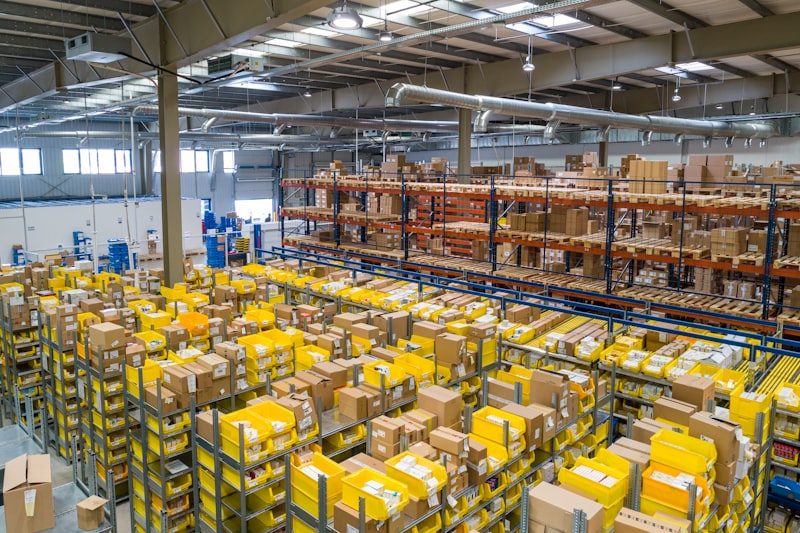
The Problem: Spreadsheets and Sticky Notes
Coastal Goods Co. had been running their inventory on a combination of Excel spreadsheets, handwritten bin cards, and what the warehouse manager called "tribal knowledge." When they started five years ago with 40 SKUs, it worked fine. But by year three, with 200+ SKUs across two locations, cracks were forming.
Here's what their weekly reality looked like:
| Activity | Time Spent (Hours/Week) | Error Rate |
|---|---|---|
| Manual cycle counting | 12 | 1 in 8 counts wrong |
| Order entry & verification | 8 | 1 in 15 orders had errors |
| Reconciling stock transfers between warehouses | 5 | 40% of transfers had discrepancies |
| Customer service (chasing stock info) | 6 | N/A |
| Total administrative overhead | 31 hours | Unacceptable |
The numbers told a painful story. They were spending nearly a full work week per employee just keeping the lights on—time that could have been spent selling, sourcing better products, or improving customer relationships.
The real cost of poor inventory management: According to a 2023 IHL Group study, inventory distortion—including stockouts and overstocks—costs global retailers over $1.77 trillion annually. For small businesses, each stockout costs an average of $1,200 in lost revenue and customer churn.
The Root Cause: Disconnected Systems and Human Error
The deeper issue wasn't laziness or incompetence. It was a system that demanded constant manual intervention.
Every time a pallet arrived at Warehouse B, someone had to:
- Unload the shipment
- Write down what arrived on a clipboard
- Walk to the office computer
- Open the shared Excel file (which was usually locked by someone else)
- Manually update quantities
- Hope no one else had changed the file in the meantime
When a customer called asking "Do you have 12 cases of product X in stock?", the answer was rarely immediate. The sales rep would put the customer on hold, walk to the warehouse, check the bin, walk back, and pray the number hadn't changed by the time they picked up the phone.

The real kicker? Their inventory accuracy hovered around 72%. Nearly three out of every ten items in their system had wrong quantities. That's not a rounding error—that's a business risk.
The Solution: Modernizing Without the Enterprise Price Tag
Coastal Goods Co. knew they needed to upgrade. They evaluated the usual suspects: Cin7, inFlow, Zoho Inventory. But the pricing for multi-location support and barcode scanning was eye-watering—often $200-500/month for the features they actually needed.
That's when they found Fluxventory. What sold them wasn't the price alone—it was the combination of:
- True multi-location support at the Business tier ($99/month)
- USB barcode scanner compatibility for their desktop warehouse setup
- Real-time sync between their two warehouses
- AI-powered stock alerts that could predict when they'd run out
Here's what happened in the first 90 days:
| Metric | Before | After | Improvement |
|---|---|---|---|
| Inventory accuracy | 72% | 97% | +25 percentage points |
| Weekly admin hours | 31 hours | 16 hours | -48% |
| Stockout incidents/month | 8-12 | 1-2 | -83% |
| Order processing time | 45 minutes | 12 minutes | -73% |
| Customer satisfaction score | 3.8/5 | 4.6/5 | +21% |
"The barcode scanning alone saved us 10 hours a week. We went from counting boxes by hand to scanning pallets in 90 seconds. Our warehouse manager thought I was joking when I showed him the first demo." — Operations Manager, Coastal Goods Co.
How Fluxventory Helped
For Coastal Goods Co., the transition was surprisingly smooth. They started with a single afternoon of setup—importing their 340 SKUs from the Excel spreadsheet into Fluxventory. The platform's multi-tenant architecture meant their data stayed isolated and secure, but they could give access to both warehouse teams and the office staff.
The barcode scanning feature was the game-changer. They already had a USB barcode scanner on their desktop (the kind you can buy for $40 on Amazon). Plugged it in, pointed it at a label, and the system updated instantly. No more walking to the office to update a spreadsheet. No more "I'll do it later" data entry.
The AI-powered stock alerts started firing within the first week. One alert caught their attention: a popular SKU was projected to run out in 10 days based on current sales velocity and their 14-day lead time from the supplier. They placed the order immediately and avoided what would have been a $3,800 stockout on their highest-margin item.
The Bottom Line
Eight months later, Coastal Goods Co. has grown to 410 SKUs and opened a third small warehouse. Their inventory accuracy hovers at 97%. The operations manager now spends his time on strategic sourcing and customer relationships instead of chasing discrepancies.
The total cost? $99/month for the Business tier. The ROI in the first quarter alone—from reduced stockouts, fewer order errors, and reclaimed labor hours—was over $12,000.

Ready to Write Your Own Case Study?
If Coastal Goods Co.'s story sounds familiar—if you're spending too much time fighting your inventory system instead of growing your business—it's time for a change. You don't need an enterprise budget to get enterprise-grade inventory management.
Start with the Free tier to see if Fluxventory fits your workflow. No credit card required. No sales calls. Just a modern, AI-powered inventory system that works the way your business does.
Start your free trial at fluxventory.com/register — join the growing number of businesses that have stopped wrestling with spreadsheets and started focusing on what matters.
Ready to take control of your inventory?
Join businesses using Fluxventory to track stock in real time, reduce losses, and make smarter decisions.